Sanitation Inspections: Response to Pandemics, Outbreaks & Flu Season
Sanitation inspections and cleans are at the core of ensuring health and life safety in built environments. The COVID-19 pandemic changed how we clean and disinfect buildings — and the standard of service that is expected.
Take a moment to think about your journey to your office desk: how many people you pass; how many things you touch, such as your car steering wheel or transit handles, elevator buttons and door handles. Now think about your movement during the day — from your desk, to the kitchen, to a meeting room, to the washroom, to the food court, and back to your desk. You touch a lot of things. It's difficult to keep track of what has been cleaned, when, and by whom.
This is why the documentation and signing off on sanitation inspections are so critical.
How sanitation inspections have changed
As a result of the global pandemic, sanitation inspections were impacted in two main ways: frequency of cleans & verification of work.
1. Increased frequency of sanitation inspections and cleans
It's expected by employees and tenants that sanitation inspections and cleans are completed regularly, thoroughly, and frequently — exceeding pre-pandemic intervals.
- This is especially true for common and high-traffic areas.
- We've even seen provincial legislation come into effect recently, mandating sanitation inspections and their documentation.
2. Verification of work
It's expected that sanitation inspections and cleans are documented — dated and time-stamped.
- Verification of work increases due diligence and mitigates risk; it also creates transparency and trust among employees and tenants.
- Employees and tenants want assurance that appropriate cleaning protocols are being followed.
- Documentation of who inspected an area and when, especially over a history of time, demonstrates a consistent story of care and reasonable precaution, which is critical if something were to go awry or if there's an outbreak at your facility.
- Signing off on inspections puts more accountability on those performing the cleans.
- Under recent provincial legislation, inspection documentation must be readily available and can be asked for at any time.
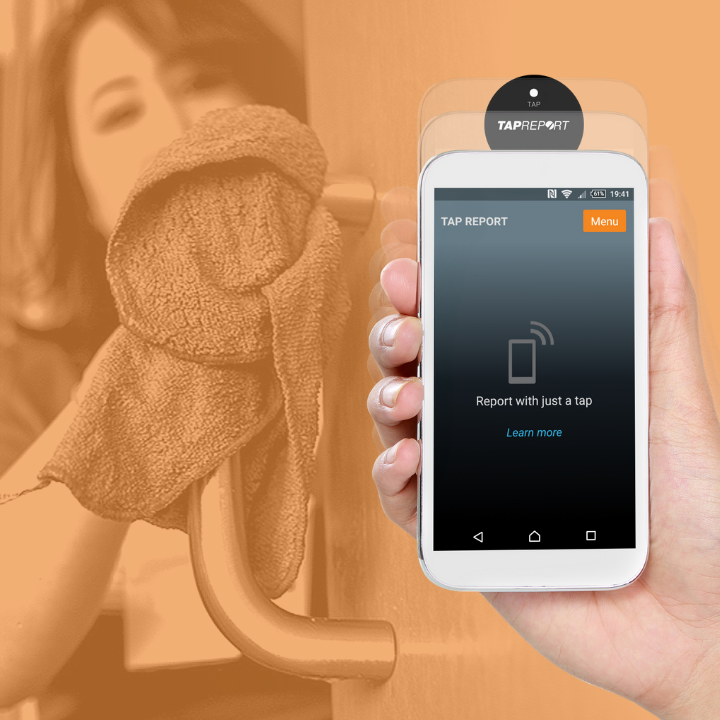
Digital inspections and documentation can help streamline your inspection process and provide real-time data. They also help to create trust and transparency through documented due diligence, which is in turn, is good for your brand.
There are a few different technologies on the market such as barcodes, QR codes, bluetooth beacons, and near-field communication microchips.
For more information on how Tap Report can help streamline your sanitation inspections, contact us at customerservice@tapreport.io.
Resources
- What offices might look like in a post-COVID world - CBC
- What Makes an Office Building 'Healthy' - HRB
- What's Next For Real Estate And Proptech After Covid-19? - Forbes
- COVID-19 and workplace health and safety - Government of Ontario
- Health and Safety Association Guidance Documents for Workplaces During the COVID-19 Outbreak - Government of Ontario
About Tap Report
Tap Report is a Canadian software company that provides a digital solution for managing workplace inspections, safety compliance, and operational reporting. It replaces manual processes, such as paper checklists and spreadsheets, with a mobile and web-based system that allows teams to complete inspections, capture data, and generate compliant reports.
Through an easy-to-use interface and automated workflows, Tap Report helps ensure that inspections are completed, deficiencies are categorized and tracked, and issues are escalated efficiently to the right people. It also offers analytics, customizable reporting, and integrations that helps organizations improve safety, compliance, and operational performance.
For more information, visit www.tapreport.io or contact us at customerservice@tapreport.io.
More articles
Health & Safety